
- Home » blog » How to Protect a Bronze Statue Outside
How to Protect a Bronze Statue Outside
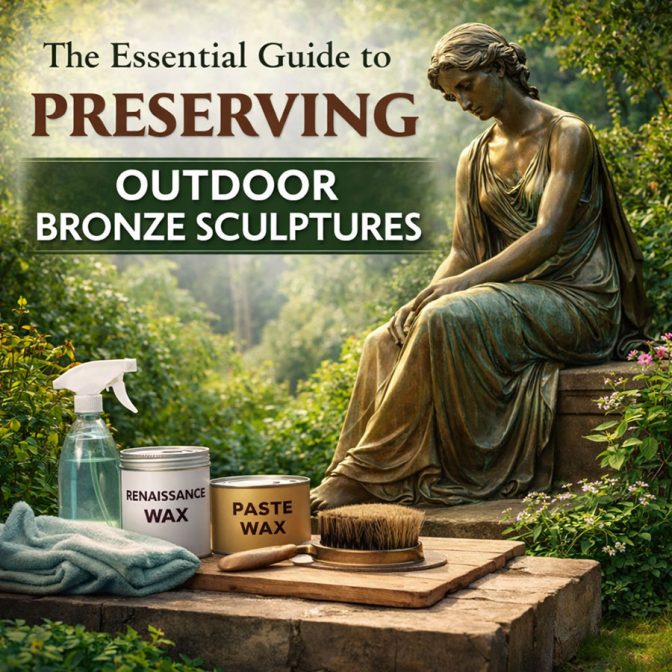
Proper care keeps your outdoor bronze sculpture stunning for generations. This guide covers cleaning, waxing, installation tips, and weather protection to preserve its beauty, patina, and artistic value. Following these practices ensures that your outdoor bronze sculpture remains a stunning centerpiece for generations, preserving both its artistic value and historical significance.
Introduction
Imagine this: You’ve invested thousands in a custom bronze sculpture, the centerpiece of your garden, the most captivating feature of your entire landscape. Yet within a year,
that flawless surface begins showing unsightly spots and streaks. Bronze is durable, but improper care leads exactly to this scenario.
As The Art Newspaper reported in November 2025, outdoor art faces complex preservation challenges. Exposed to the natural environment and public interactions, these works deteriorate without proper maintenance.
Drawing upon our more than forty years of experience in casting and restoration, this article provides a comprehensive guide to the preservation of outdoor bronze statues—covering everything from site selection to emergency response, and from cleaning to waxing.
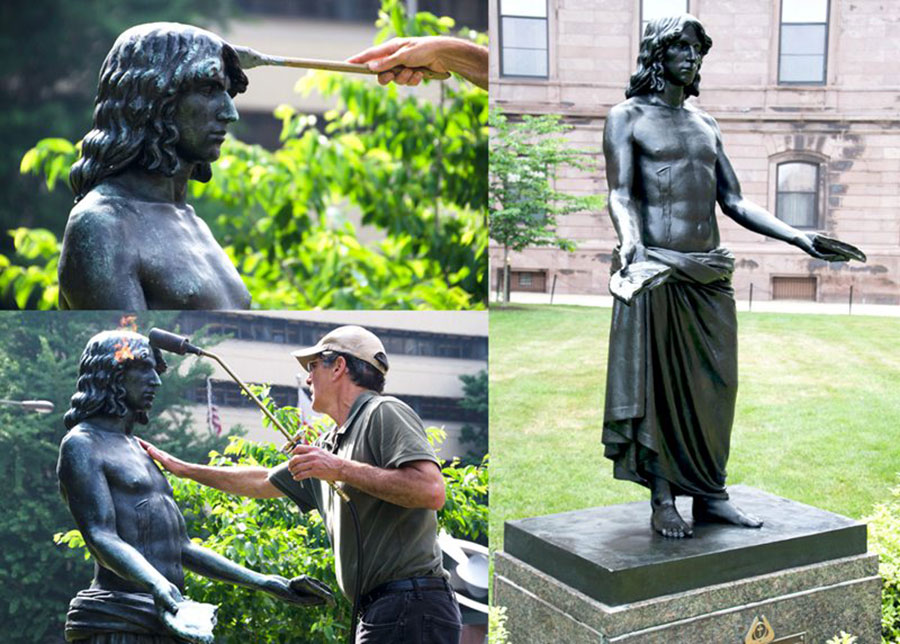
Understanding Bronze and Verdigris
What is Bronze?
Bronze is a copper-tin alloy that possesses a unique characteristic: self-healing. When the surface of bronze is exposed to air, it naturally forms a layer of oxides; this layer, in turn, protects the underlying metal from further corrosion. This is why bronze artifacts can survive for thousands of years.
What is Verdigris?
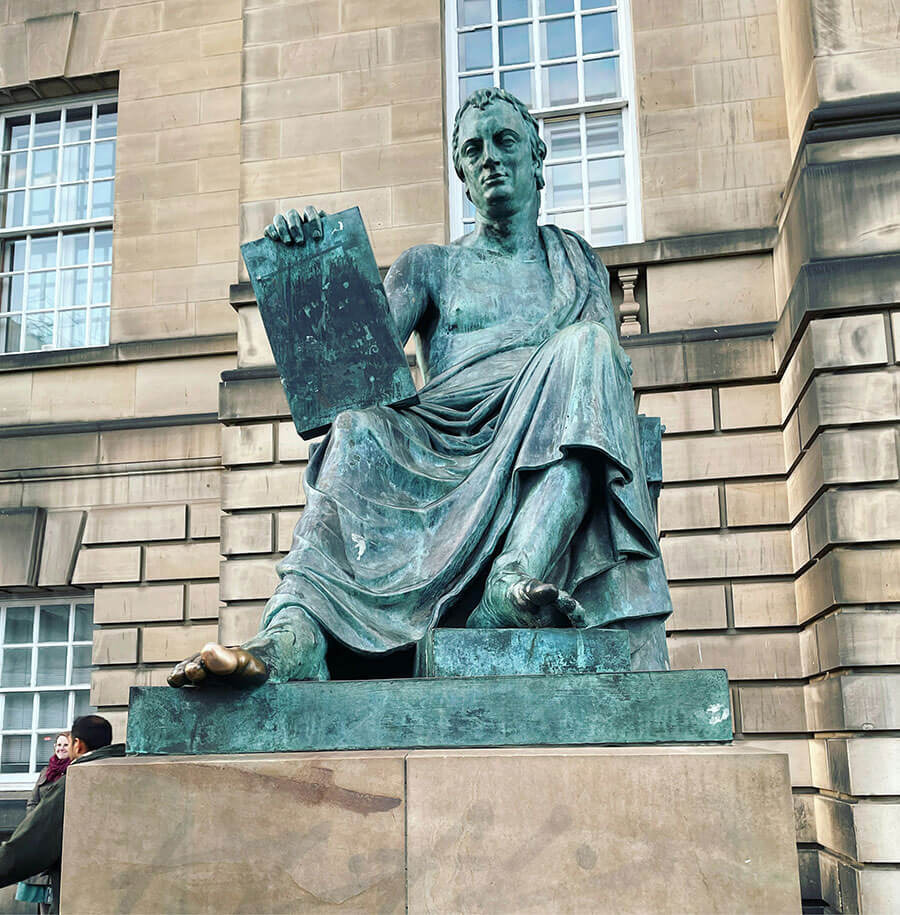
Verdigris is the surface layer that forms on bronze statues, but is not rust. It is a type of patina.
A good patina is uniform, dense, and firmly adhered. Think of it as bronze’s skin: it seals out oxygen and moisture, protecting the metal beneath. Simultaneously, it offers aesthetic value, endowing the sculpture with a rich palette of colors—such as classic brown, emerald green, black-brown, and golden yellow.
Before Installation: Prevention Starts Here
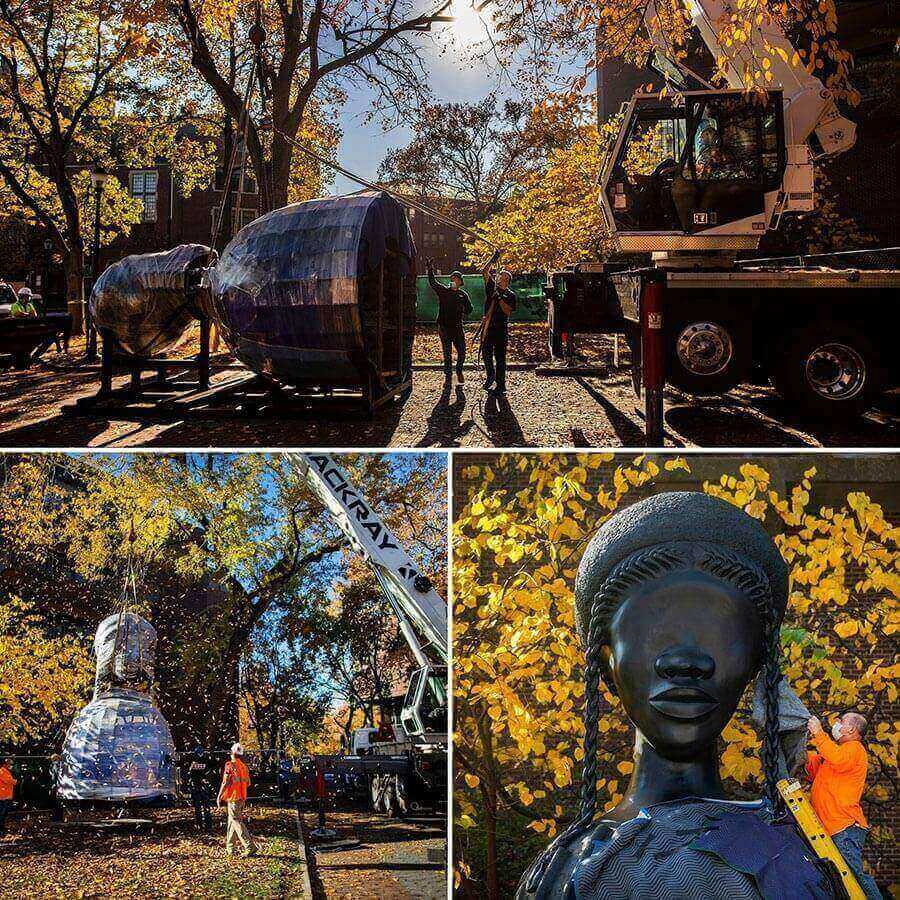
Most bronze damage is not caused by the passage of time, but rather by an initial error in site selection. To protect outdoor bronze sculptures, the following factors must be taken into consideration during the site selection phase.
Environmental Factors:
Flood-prone areas? Prioritize drainage and ventilation
Hurricane or storm regions? Reinforce the base and plan for frequent maintenance
Freezing climates? Account for frost heave and freeze-thaw cycles
Base Design
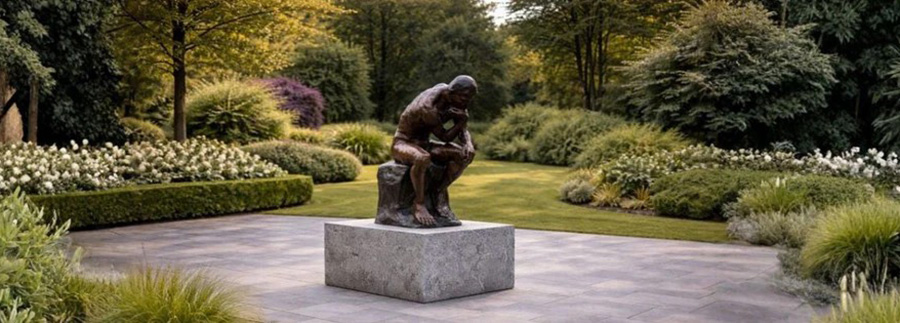
Elevation is essential. Never place bronze directly on soil or grass. Raise it at least 15-20cm (6-8 inches) to ensure bottom ventilation and prevent capillary moisture rising from the ground.
Security and Theft Prevention
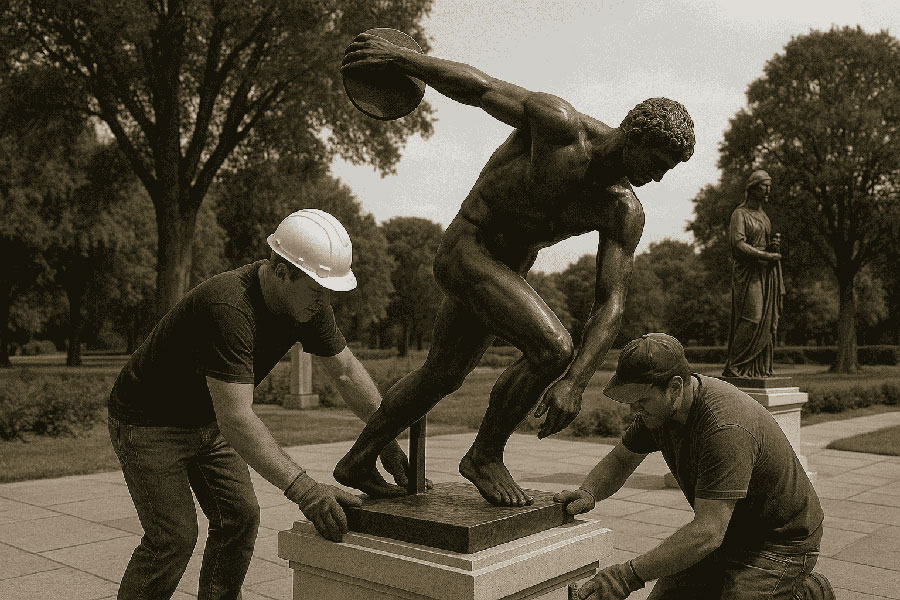
Security concerns must not be overlooked. Anchoring the sculpture not only enhances its stability but also makes it significantly more difficult to steal. If concerns regarding theft risks persist, the installation of surveillance cameras should also be considered.
Anti-theft bolts: Use specialty bolts requiring unique tools for removal.
Surveillance: Position within camera range if theft is a concern.
Pre-Installation Checklist
| Question | Yes | No | Note |
| Is the sculpture away from automatic sprinklers? | □ | □ | Constant moisture accelerates patina change |
| Is the base elevated at least 15cm? | □ | □ | Ground contact is bronze’s worst enemy |
| Is there an anti-theft plan? | □ | □ | Small to medium sculptures are vulnerable |
| Is maintenance access reserved? | □ | □ | Tight shrubs make cleaning and waxing impossible |
| Is it away from leaf buildup and bird roosts? | □ | □ | Acids from organic matter corrode surfaces |
| Uncertain about installation? Our engineering team offers on-site consultation and foundation drawings. | |||
Daily Cleaning
Frequency: Light cleaning every three months; deep cleaning at least twice yearly.
Tools you’ll need:
- Soft-bristlebrushes
- Naturalsponges
- Milddetergent
- Cottontowels
- Spraybottle
Step-by-Step operation:
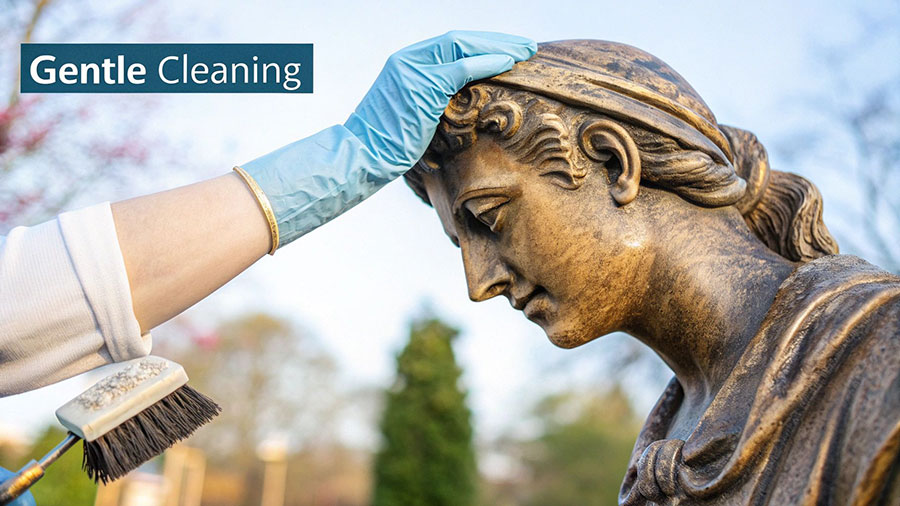
- Rinsing: Rinse with clean water from top to bottom to wash away dust and bird droppings.
- Cleaning: Using a water-dampened sponge and a cleaning agent, scrub the surface; for crevices, use a soft-bristled brush.
- Thorough Rinse: Ensure that all residue is completely rinsed away.
- Drying: Wipe with a cotton towel to absorb and dry the surface moisture.
Heating and Waxing
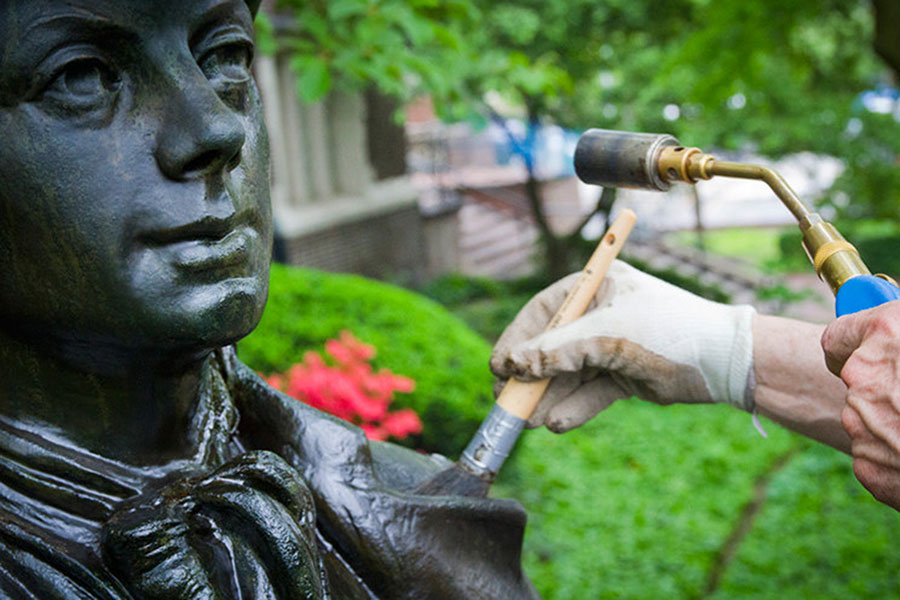
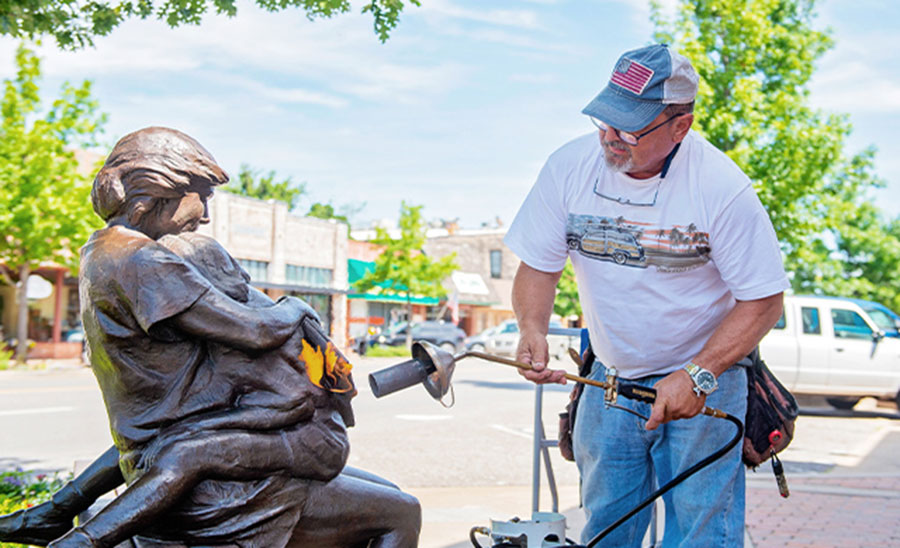
Wax serves as a sacrificial layer, absorbing the corrosive effects of ultraviolet radiation and acidic substances in place of the bronze itself. It locks in the attractive patina while simultaneously preventing moisture penetration, thereby establishing a protective barrier between the bronze and the external environment. For outdoor sculptures, waxing is not an optional step, but an absolute necessity.
Frequency:
For outdoor sculptures, a waxing treatment is recommended every six months. How can you determine if waxing is needed? Observe the condition of the wax layer: if the layer has darkened, lost its luster, or if water no longer beads up on the surface (indicating a loss of the “lotus effect”), it is time to reapply the wax.
Choosing the right wax:
Several quality waxes are available:
Renaissance Wax: A microcrystalline wax, the museum-grade choice. Ultra-thin coating, never yellows, forms a chemically stable barrier. Ideal for lighter patinas where color preservation is critical.
Johnson’s Paste Wax (clear): A trusted traditional wax that enriches and deepens bronze tones. Excellent for darker, traditional patinas where depth and warmth are desired.
Trewax (clear): High-quality, widely available paste wax suitable for lighter patinas—won’t over-darken the finish.
Different patinas react differently to wax. Some waxes darken; others don’t. Some perform better in humid climates; others in dry conditions. The wrong choice can cause problems: colors
shifting too dark or too light, wax failing prematurely, or—in extreme cases—patina damage.
Need help deciding? Snap a few clear photos, briefly describe your sculpture’s environment and your goals, and email us. Our team will assess your patina and recommend the right approach—free, regardless of who made your sculpture.
Application steps:
- Prepare your brush
Get a new 2-inch natural bristle brush (chip brush). Before dipping in wax, wrap masking tape around the metal ferrule where bristles meet the handle. (Note: Extend the tape 1/6 to 1/8 inch past the ferrule’s bottom, completely covering the metal edge. This prevents accidental scratches when working into deep crevices, eliminating 99% of brush-related damage.)
- Warm the sculpture
Choose a sunny day. Let the sculpture warm in the sun for an hour, or gently heat with a heat gun (low setting). Slight warmth helps wax penetrate.
Apply wax
- Start at the top
Lightly load your brush—no clumps. Apply a thin, even layer. Work continuously from one edge to the next, moving around and down the sculpture.
- Let dry
Allow wax to harden completely (typically 15-30 minutes).
- Buff
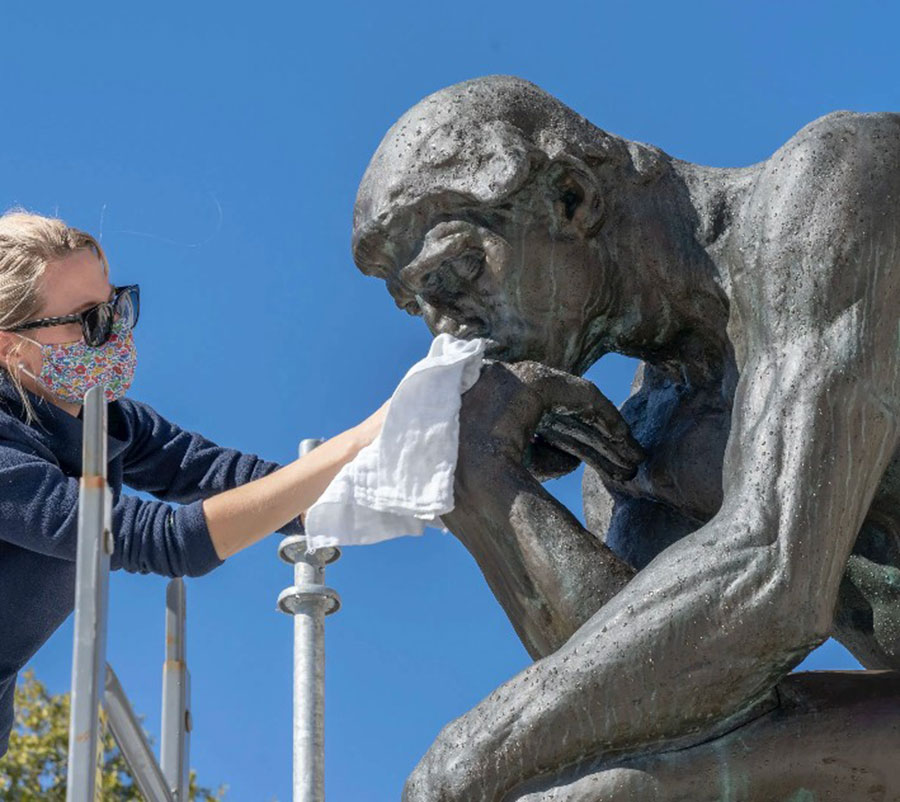
Using a clean, dry cotton towel, buff in circular motions. The surface will transform from hazy to a beautiful satin sheen.
Emergency Response: Extreme Weather
Hurricanes
Before: Move small to medium sculptures indoors. Check foundations and welds on large fixed pieces.
After: Inspect immediately for dings or scratches from debris. Clean and rewax any wounds promptly to prevent moisture infiltration.
Severe Cold
Apply a thorough protective wax coating before the onset of winter.
After snowfall, promptly rinse the lower section of the sculpture with clean water to remove any residual salt that may have splashed onto it.
Avoid using metal tools to clear accumulated snow in the vicinity of the sculpture.
What NOT to Do
Never Use Chemicals
Avoid cleaners, rust removers, fertilizer spray, chlorine, insecticides, bug spray, window cleaner, ammonia, or any household chemicals. These substances damage patina irreversibly.
No Abrasives
Unless specifically advised, never use abrasive pads, steel wool, or sandpaper. These leave permanent scratches. Use only soft brushes and cloths.
Don’t Misunderstand Natural Aging
Don’t expect your sculpture to “look new forever.” Bronze naturally deepens and softens over time. Over-maintenance—waxing too frequently, using wrong products, trying to restore “like-new” appearance—destroys its unique character.
Know When to Call a Professional
If your sculpture is a known artist’s original, historically significant, high-value, or simply very large, don’t DIY. Some damage is irreversible. Professional assessment costs far less than restoration later.
Conclusion
An outdoor bronze sculpture isn’t a “set it and forget it” purchase. It needs attention, like a tree or a garden.
Regular inspection (twice yearly recommended) catches small issues before they become major repairs. Watch your patina’s evolution. Notice your wax layer. Clean and rewax promptly.
These simple habits let your sculpture last generations.
Proper maintenance isn’t just protecting an object. It’s preserving history, emotion, and artistic legacy.